

2026-08-14
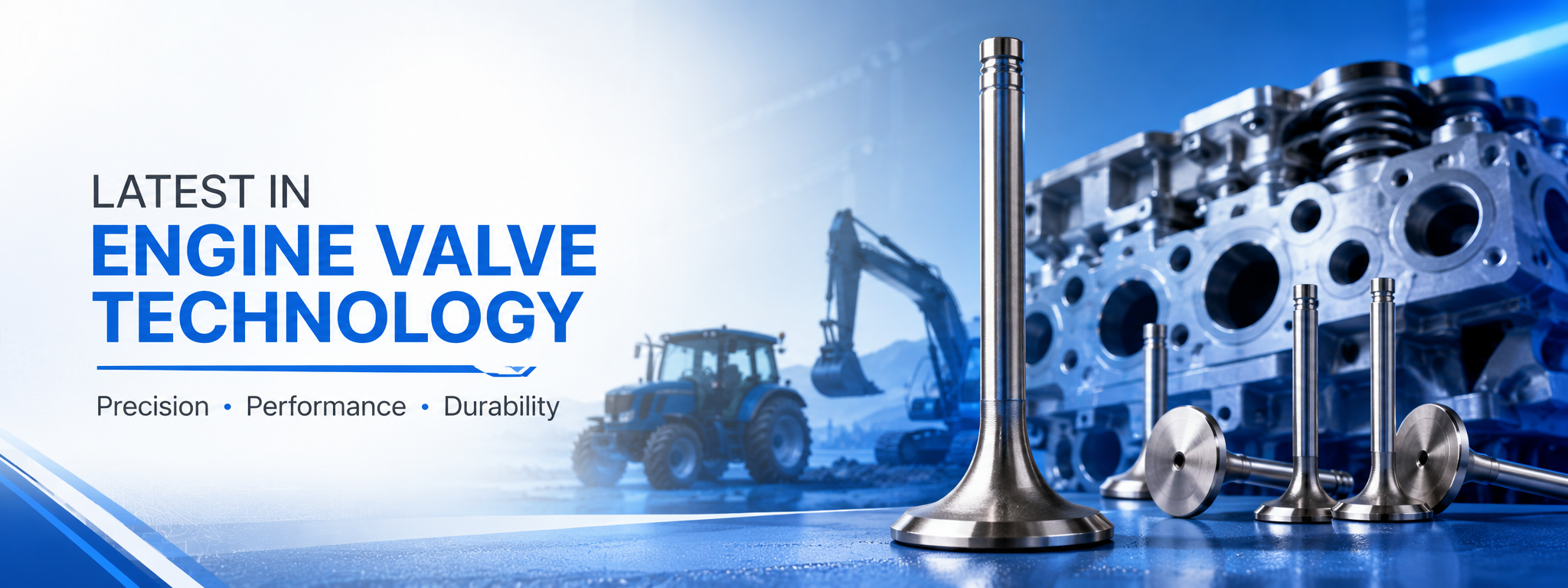
In an internal combustion engine, every component has an important role to play, and the engine valve is one of the most critical. From tractors and agricultural machinery to excavators, loaders, and other heavy-duty equipment, valves regulate the movement of intake air and exhaust gases, directly influencing combustion, efficiency, and engine performance.
As modern diesel engines continue to evolve, manufacturers are focusing on greater fuel efficiency, improved durability, reduced emissions, and dependable operation under demanding conditions. These changing requirements are driving continuous improvements in engine valve materials, manufacturing processes, surface treatments, and performance testing.
For machinery used in agriculture and construction, reliable engine valves are particularly important. Equipment often operates for long hours under heavy loads, high temperatures, dust, vibration, and challenging working conditions. High-quality valves help engines maintain consistent performance while reducing the risk of premature wear and unexpected downtime.
In this article, we explore the key developments influencing modern engine valve technology and how they can benefit tractors, earthmoving equipment, excavators, and other diesel-powered machinery.
Engine valves are precision components installed in the cylinder head of an internal combustion engine. Their primary function is to control the flow of gases into and out of the combustion chamber.
Most engines use two primary types of valves:
Intake Valves: Allow the required air or air-fuel mixture to enter the combustion chamber.
Exhaust Valves: Allow combustion gases to exit the cylinder after the combustion process.
Although engine valves are relatively small components, they operate under severe conditions. They are exposed to high temperatures, combustion pressure, repeated mechanical movement, and continuous contact with other engine components.
Because of these demanding operating conditions, valve design, material selection, dimensional accuracy, and surface quality are essential for reliable engine operation.
Heavy-duty diesel engines are expected to deliver more power while consuming less fuel and meeting increasingly demanding environmental requirements. At the same time, agricultural and construction equipment must remain dependable during extended operating cycles.
Traditional valve designs continue to serve many applications, but advancements in engine technology have created new requirements for durability, thermal resistance, precision, and service life.
Modern engine valve manufacturers are therefore concentrating on areas such as:
These developments are particularly valuable for tractor engines, excavators, earthmovers, and other machinery that operates under demanding loads.
Material selection plays a major role in determining how an engine valve performs throughout its service life.
Modern valve manufacturing can involve specially selected steels and other engineered materials designed to withstand high mechanical and thermal stresses. Depending on the engine application, material characteristics such as hardness, strength, heat resistance, and wear resistance must be carefully considered.
High Strength:
Engine valves must withstand repeated loading and mechanical forces without losing their dimensional integrity.
Heat Resistance:
Exhaust valves in particular experience extremely high temperatures. Appropriate materials help maintain reliability under thermal stress.
Wear Resistance:
Improved material properties can reduce wear at critical contact areas and contribute to longer component life.
Reliable Performance:
Properly selected materials help valves maintain their required characteristics throughout demanding operating cycles.
For tractor engine valves and heavy-equipment applications, these properties are essential because machines frequently operate for extended periods under significant loads.
In addition to the base material, surface engineering can play an important role in valve durability.
Specialized surface treatments and coatings can be used for specific applications to improve characteristics such as hardness, wear resistance, friction behavior, and resistance to high-temperature conditions.
These technologies can help protect critical valve surfaces from the demanding environment inside a combustion engine.
The result can be improved component durability and more consistent performance over the operating life of the engine.
Modern engine valves require extremely accurate dimensions and consistent production quality. Even small variations in critical dimensions can affect valve seating, sealing, timing, and overall engine performance.
Advanced manufacturing technologies have made it possible to achieve increasingly precise and repeatable production.
Computer Numerical Control (CNC) machining enables manufacturers to produce precision components according to carefully controlled specifications.
For engine valves, accurate machining helps maintain important characteristics such as:
Consistent manufacturing is especially important when supplying replacement valves for tractors, excavators, earthmovers, and other diesel engines.
Modern valve production can also incorporate automated inspection, precision measurement, controlled heat treatment, and quality-testing procedures.
These processes help manufacturers identify dimensional or material variations and maintain consistent product quality from batch to batch.
At Perfect Spares, attention to manufacturing precision and product quality is central to supplying dependable tractor and diesel engine components for customers across international markets.
Valve timing is another important factor in engine performance.
The intake and exhaust valves must open and close at the appropriate points during the engine cycle. Correct timing helps the engine achieve efficient air intake, combustion, and exhaust-gas removal.
When valve operation is properly synchronized with the engine's operating conditions, it can contribute to:
For heavy-duty machinery, maintaining accurate valve operation is particularly important because engines may experience rapidly changing loads during normal operation.
Technology is also changing the way engine components are designed, tested, and manufactured.
Computer-aided engineering, simulation, digital measurement, and data analysis allow manufacturers to study component behavior before and during production.
Engine valve development can benefit from digital tools used to evaluate factors such as:
Data-driven manufacturing and inspection can also help improve consistency and identify potential production issues at an early stage.
As digital manufacturing continues to develop, these technologies are expected to play an increasingly important role in the production of precision engine components.
Agricultural equipment frequently operates in demanding environments and may run for long working hours during planting, harvesting, transportation, and other farm operations.
A reliable engine valve helps the engine maintain proper gas flow and combustion performance.
For tractor owners, operators, and maintenance professionals, selecting properly manufactured replacement valves can support:
Quality tractor engine valves are therefore an important part of maintaining dependable agricultural machinery.
Excavators, loaders, backhoes, and other earthmoving machines often work under heavy loads and in challenging environments.
Their engines may operate continuously for extended periods, making durability and reliability essential.
High-quality engine valves designed for heavy-duty applications can help support dependable engine operation in machinery used for:
For equipment owners and fleet operators, reliable engine components can help minimize unplanned maintenance and keep machines productive.
Selecting an engine valve should not be based on appearance or price alone. Correct application and compatibility are essential.
Before purchasing a replacement valve, important factors include:
Using the correct specification helps ensure proper fitment and dependable engine operation.
Perfect Spares is focused on supplying quality tractor parts, diesel engine components, and agricultural machinery spares to customers in domestic and international markets.
Our product range is developed with emphasis on:
We understand that tractors and heavy machinery are essential to agricultural and industrial operations. That's why dependable spare parts are important for keeping equipment working efficiently.
From tractor engine components to other precision replacement parts, Perfect Spares aims to provide products that meet the practical requirements of demanding machinery applications.
Engine valve technology continues to advance as diesel engines become more efficient, powerful, and demanding. Improvements in materials, manufacturing precision, surface engineering, inspection methods, and digital technologies are helping manufacturers develop components capable of operating under increasingly challenging conditions.
For tractors, excavators, earthmovers, and other heavy-duty machinery, engine valves remain essential to reliable engine operation. Choosing accurately manufactured and application-appropriate valves can contribute to dependable performance and longer component service life.
At Perfect Spares, we are committed to supplying quality tractor and engine spare parts designed to support the needs of agriculture, construction, and heavy-equipment customers worldwide.
Looking for reliable engine valves and tractor spare parts? Choose Perfect Spares for quality components, dependable fitment, and trusted service.